“Pentecost” comes from a Greek word meaning fiftieth day. On this day, the Holy Spirit came with wind and flame, empowering the disciples to proclaim the good news of the risen Lord to all people. Falling on the fiftieth day of the season of Easter, Pentecost represents the culmination of the church’s seven-week celebration of Christ’s resurrection. As the Lord's Day is sometimes called the “eighth day” of creation, Pentecost is a day of new creation—all things transformed and made new by the Word and Breath of the living God. On the Day of Pentecost we give particular thanks for the gift of God’s Holy Spirit, who gathers the church as the body of Christ and sends us to share in Christ’s mission throughout the world.
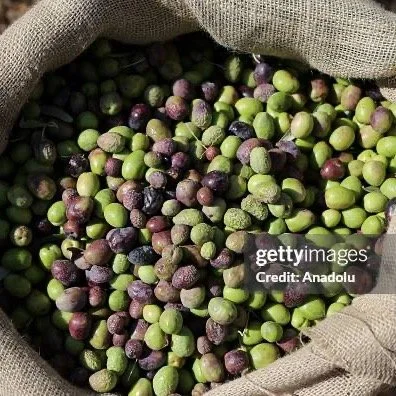
The notion of Easter as a season of fifty days is patterned after the ancient Jewish period of seven weeks that extend from the beginning of the barley harvest, after Passover, to the end of the wheat harvest at the Festival of Weeks (in Hebrew, Shavuot). In Jewish tradition, Shavuot also marks the giving of the law to Moses at Sinai, a connection that may inform Paul’s discussion of the law and the Spirit. —Book of Common Worship. Westminster John Knox Press, 2018.
When we think of Pentecost, we usually think of dramatic visuals: tongues of fire, a cacophony of voices, a blowing of wind, or maybe a jeering crowd accusing the disciples of drunkenness. But the spectacle isn’t really what this moment is about. Floating tongues of flame aren’t the main point. They’re ornamentation that draw us in, miraculous visuals really, but the heart of the story is about breath and words.
We often celebrate Pentecost as the birth of the church, but in the non-western traditions, there is an understanding that the church has existed since God created, and that Pentecost is not in fact just a birthday celebration, rather, the Acts Pentecost is a linguistic event which displays the power of the Holy Spirit. In the wake of Jesus’ ascension (Acts 1:9–10) we hear the Pentecost story as evidence of Jesus’ promised presence through the power of God’s own linguistic event.
Lately I’ve been thinking a lot about languages, about how we hear one another. Something happens when we speak each other's languages — be they cultural, political, racial or liturgical. We experience the limits of our own perspectives. We learn curiosity. We discover that God's "great deeds" are far too nuanced for a single tongue, a single fluency. I have always loved ecumenism, because when I listen to and learn from my colleagues in different denominations and traditions, then I see just how expansive God is for the world. The troubles of our day—global, national, and catastrophic—cry out for the bravery of a bold and creative Church who is willing to learn to speak the languages of people all around them. Willing to listen, to pursue a phenomenon of understanding.
It is no small thing that the Holy Spirit loosened tongues that Pentecost day. In the face of difference, God compelled people to engage. To open their mouths and with their breath expel truth, to tell of the one who came and is coming, to literally share the Good News with all people. From Day One, the call was to be present, to listen, and to meet people where they are.
At Pentecost, understanding of one another’s languages is gifted, not through human learning or manipulation, but through the grace and power of the Holy Spirit.
We serve a God who meets us in the full truth of who we are, who knows our intimate stories, our realities, who invites us with a gentle push into telling this story to others. We can be truth tellers about the story which was and which is to come, and we can learn what it means to know the stories of those around us. As we share this experience, may it ignite an experience of healing for our world.